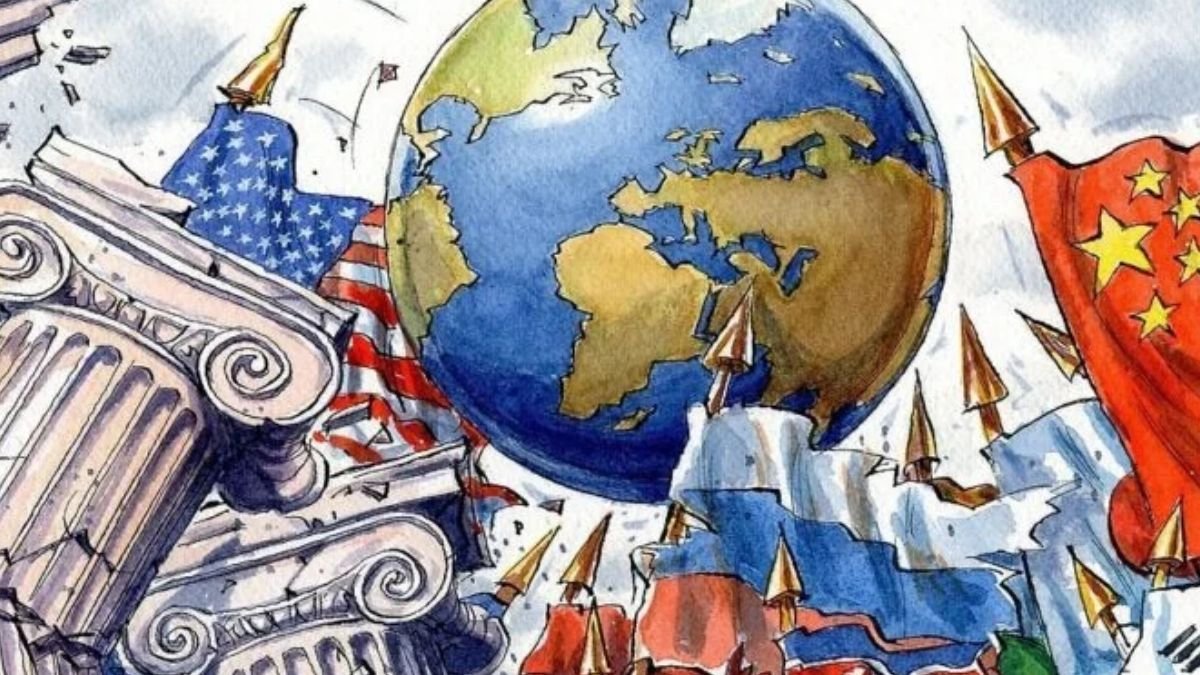
The international political landscape is undergoing a profound structural realignment.
From crucial international elections to rapid policy shifts surrounding global trade, energy security, and regional diplomacy, governments across the world are navigating complex economic and geopolitical challenges.
Understanding global politics today requires looking past partisan headlines and analyzing the systemic structural shifts taking place across international institutions, national election cycles, and global trade frameworks.
Let’s break down the primary economic, geopolitical, and technological forces driving today’s global political landscape.
National Elections and Democratic Realignment
Elections across key global economies are serving as litmus tests for modern governance. Voters around the world are expressing clear demands for economic stability, border security, inflation control, and national sovereignty.
+-----------------------------------------------------------------------+
|                    GLOBAL GEOPOLITICAL RE-ALIGNMENT                   |
+-----------------------------------------------------------------------+
|  DOMESTIC PRESSURE        ---> Focus on Inflation & Industrial Policy |
|  GLOBAL TRADE             ---> Friend-Shoring & Supply Chain Security |
|  DIGITAL GOVERNANCE       ---> AI Regulation & Cyber Sovereignty     |
+-----------------------------------------------------------------------+
Political dynamics show a clear trend: traditional ideological lines are blurring. Working-class voters and young demographics are shifting their political alignments based on pragmatic economic outcomes—such as housing affordability, job creation, and wage growth—rather than legacy party loyalty.
Geopolitics, Supply Chains, and Economic Nationalism
Economic security is now synonymous with national security. In response to recent supply chain disruptions and geopolitical friction, major powers are accelerating economic nationalism and industrial policy.
Key Policy Pivots Restructuring International Relations
- Near-Shoring and Friend-Shoring: World leaders are incentivizing companies to move manufacturing infrastructure away from geopolitical rivals and back to allied nations.
- Strategic Resource Allocation: The race to secure critical mineral supplies—such as lithium, cobalt, and rare earth elements necessary for green energy and microchips—is reshaping diplomatic alliances in Africa, South America, and Asia.
- Tariff Policies and Trade Agreements: Global trade frameworks are pivoting away from historic free-trade ideals toward strategic protectionism designed to safeguard domestic industrial bases.
These policies mark a significant departure from late-20th-century globalization, creating a multipolar economic landscape where national interests take precedence over international economic integration.
Digital Sovereignty and the Politics of Artificial Intelligence
Technology is no longer separate from global diplomacy—it is at the very center of foreign policy agendas.
Governments worldwide are scrambling to enact clear regulatory frameworks for domestic technology stacks. Issues surrounding microchip manufacturing, subsea data cables, artificial intelligence governance, and cybersecurity are now top priorities in national security councils.
“Digital sovereignty is the new diplomatic battleground. Nations that control underlying compute infrastructure and data pipelines will dictate the global geopolitical rules of the 21st century.”
Regulators face a delicate balancing act: implementing safety measures and protecting data privacy without stifling technological innovation and economic competitiveness.
Climate Diplomacy and the Energy Transition Shift
Energy policy remains one of the most contentiously debated topics in global politics. Governments must manage the complex transition toward clean energy infrastructure while guaranteeing stable, affordable energy access for their populations today.
Developing nations are pressing wealthy economies for equitable climate financing, while industrialized countries weigh the economic trade-offs of rapid decarbonization targets. The result is a pragmatic geopolitical approach, with nations combining renewable investments with secure nuclear and traditional energy sources to guarantee grid stability.
Pragmatism in an Unpredictable World
Navigating modern global politics requires balancing domestic economic imperatives with complex international diplomacy.
As global elections continue to reshape national parliaments and governments prioritize economic security, digital sovereignty, and energy resilience, international relations will be defined by pragmatic, interest-driven alliances. Understanding these structural shifts is essential for navigating the complex global landscape ahead.
Keywords Integrated
- Global politics analysis
- Geopolitical realignments
- International electoral trends
- Economic nationalism and trade
- Digital sovereignty policy
- Supply chain security
- Energy diplomacy policies
- International relations policy