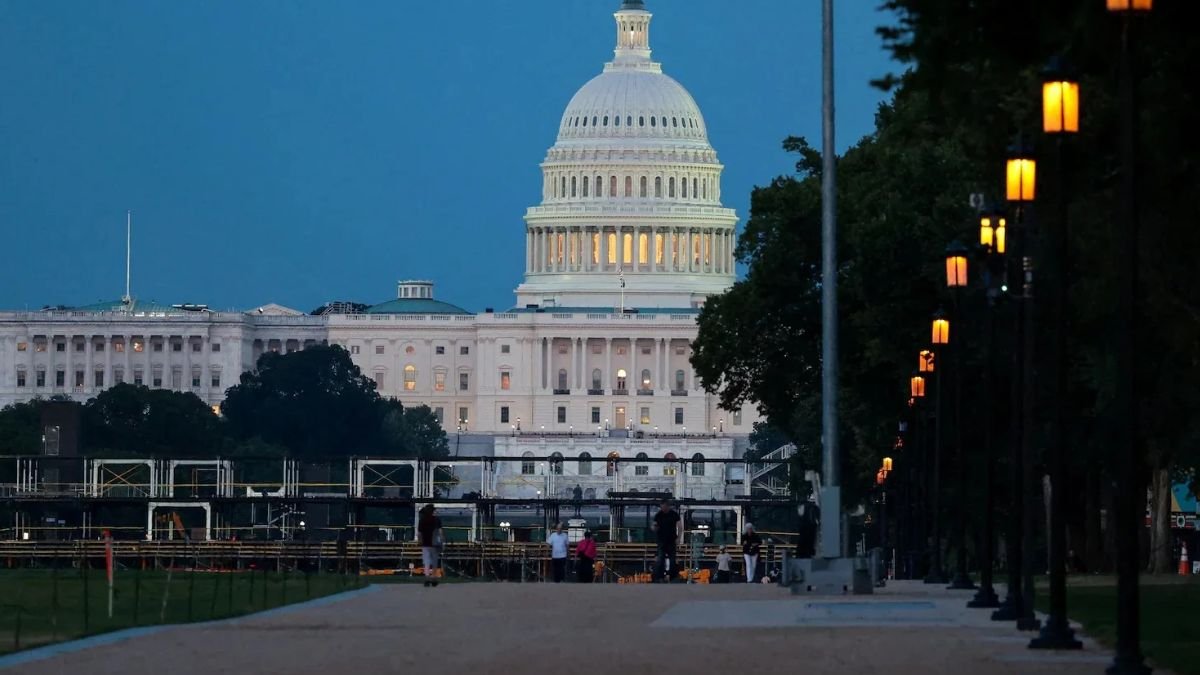
US Midterm Elections 2026: Polls, Key Issues, and Congress Explained. Understand the 2026 US midterm elections, including the economy, immigration, healthcare, congressional control, polling, and what the results could mean for American politics.
On November 3, 2026, American voters will decide who represents them in Congress. The outcome could reshape the political environment for the remainder of President Donald Trump’s term, influencing everything from government spending and immigration policy to investigations, healthcare, and the administration’s legislative agenda.
Midterm elections often receive less international attention than presidential elections. That can be misleading.
The United States Congress writes legislation, approves federal spending, conducts oversight, and plays a central role in shaping national policy. A change in control of either chamber can alter how easily a president advances an agenda.
The central question this year is straightforward: will Republicans retain their congressional majorities, or will Democrats gain enough seats to exercise greater control over the legislative process?
A Reuters report published on October 20 identified affordability, immigration, and President Trump’s political standing as major themes of the campaign, while noting that technology and other policy issues could influence competitive races. <Cite refs={[“turn706597news49”]}/>
Understanding the election requires looking beyond campaign slogans. The economic conditions voters experience, the structure of Congress, and the issues dividing different communities will all influence the result.
What Are the US Midterm Elections?
US midterm elections take place halfway through a president’s four-year term. They determine the composition of the House of Representatives and approximately one-third of the Senate, alongside elections for governors and other state and local offices.
The 2026 elections are particularly significant because the balance of power in Congress is closely contested.
Why control of the House of Representatives matters
The House has 435 voting members, each elected from a congressional district for a two-year term.
The party controlling the House generally determines committee leadership and the legislative agenda. It also has substantial influence over federal spending legislation, tax proposals, and the initiation of impeachment proceedings.
If the opposition party gains control, it can make the president’s legislative priorities harder to advance. It can also increase oversight of the administration through hearings, investigations, and requests for documents.
However, House control does not give a party unlimited power. Legislation must still navigate Senate procedures, constitutional requirements, presidential action, and sometimes judicial review.
Why the Senate matters too
The Senate has 100 members, with staggered six-year terms. Its responsibilities include considering legislation, confirming many presidential nominees, and approving treaties under constitutional procedures.
Control of the Senate can affect judicial appointments, executive branch staffing, and the progress of legislation.
A divided Congress can therefore produce a different political environment from one in which a single party controls both chambers and the White House.
The consequences depend on the issue, the size of the majority, and whether members of the governing party agree with one another.
The Economy and Cost of Living: The Election’s Central Test
For many voters, the most immediate political question is not ideological. It is whether household finances are becoming easier or harder to manage.
Housing, groceries, healthcare, transport, energy, and childcare influence daily life. When these expenses rise faster than incomes, voters may feel economic pressure even if headline economic indicators appear relatively strong.
That distinction matters in election campaigns.
Politicians frequently point to economic growth, employment, wage increases, or tax reductions to demonstrate success. Voters may instead focus on the price of rent, the cost of a medical appointment, or the amount left in their bank accounts at the end of the month.
Neither perspective tells the entire story.
How Republicans and Democrats approach affordability
Republicans have emphasized tax policy, economic growth, border enforcement, and the consequences of government spending and regulation. Supporters argue that lower taxes and a more business-friendly environment can encourage investment and improve economic performance.
Democrats have emphasized household costs, access to healthcare, and policies intended to protect or expand economic support for working families. Supporters argue that growth is insufficient if its benefits are not reflected in ordinary household budgets.
These descriptions capture broad campaign themes rather than every candidate’s position. Individual candidates may differ significantly, particularly in competitive districts.
The real test will be whether voters believe the policies being offered can improve their economic circumstances.
It is also essential to separate campaign promises from demonstrated outcomes. A proposal to reduce costs is not evidence that prices have already fallen, just as a tax cut does not guarantee that every household will benefit equally.
Immigration Policy: Security, Enforcement, and Human Consequences
Immigration is another major dividing line in American politics.
The debate involves border security, asylum procedures, employment, deportation, public services, and the treatment of migrants. It also raises questions about the powers of federal agencies and the balance between enforcement and individual rights.
Supporters of stricter enforcement argue that governments must control their borders, apply immigration laws consistently, and maintain public confidence in the legal immigration system.
Critics of aggressive enforcement raise concerns about due process, family separation, the treatment of asylum seekers, and the potential effects on communities and employers.
These positions are not mutually exclusive in every respect. People can support border enforcement while disagreeing over how it should be carried out.
Why immigration could influence congressional races
National immigration debates can affect voters differently depending on where they live.
Border communities may focus on enforcement resources and migration flows. Agricultural businesses may be concerned about labour availability. Cities receiving migrants may face pressure on housing, schools, and local services.
These differences mean a single national slogan cannot fully explain the political choices made across the country.
The implementation of immigration policy also matters. Funding, agency authority, judicial challenges, and cooperation between federal, state, and local governments can determine how a policy operates in practice.
Voters will be judging both the stated objectives and the consequences they observe.
What Do the 2026 Election Polls Tell Us?
Polling offers a snapshot of voter preferences, not a final prediction.
A national survey asking which party voters prefer for Congress is known as a generic congressional ballot poll. It can indicate the broader political climate, but it does not directly tell us which party will win individual House districts or Senate races.
Geography matters enormously. A party can lead nationally while losing a particular state or district because the electorate is distributed unevenly.
A recent poll is also not necessarily a representative poll. The quality of the sample, the wording of the questions, the population surveyed, and the margin of error all matter.
How to read election polls responsibly
When assessing a poll, check four things:
- Field dates: When were respondents interviewed?
- Sample: Were they registered voters, likely voters, or adults generally?
- Margin of error: How much statistical uncertainty surrounds the estimate?
- Trend: Are several independent polls showing a similar pattern?
A polling average can reduce the influence of individual survey fluctuations, but it cannot eliminate sampling errors, nonresponse bias, or uncertainty about turnout.
For the latest figures, readers can consult the CBS News 2026 midterm tracker and compare it with other reputable polling sources. <Cite refs={[“turn706597search0″,”turn706597search2”]}/>
Any analysis written before election day should clearly distinguish polling leads from confirmed results. Predictions are not votes, and votes are not official results until the appropriate authorities complete their counting and certification procedures.
What Happens if Democrats Gain Control of Congress?
A Democratic victory in one or both chambers would create a more challenging legislative environment for the Trump administration.
Democratic committee chairs could expand oversight, request records, hold hearings, and investigate matters within their committees’ jurisdiction. Major legislation supported by the president could face greater obstacles.
But a congressional majority is not the same as complete control over government.
The president retains executive authority within constitutional and statutory limits. The Senate has its own procedural rules, and many policy changes require legislative action that cannot be achieved through congressional oversight alone.
The effect would also depend on the size of the majority. A narrow majority can be difficult to manage when members disagree on spending, immigration, taxes, or foreign policy.
Democrats would face their own challenge: demonstrating that they can govern effectively rather than merely oppose the administration.
What Happens if Republicans Retain Their Majorities?
Republican control would generally give the administration a more favourable environment for advancing legislation and confirming nominees, although internal disagreements could still constrain its plans.
A majority does not guarantee that every proposal will pass. Senators and representatives must consider their constituencies, electoral prospects, policy preferences, and the practical effects of legislation.
If Republicans retain control, the election would provide political evidence that their message resonated sufficiently with voters in the districts and states they contested. It would not automatically establish that every part of the administration’s agenda has broad national support.
The results would need to be interpreted alongside turnout, state-level differences, and the margins in competitive races.
Why These Elections Matter Beyond the United States
American domestic politics can influence international trade, defence spending, technology regulation, climate policy, and diplomatic relationships.
For other countries, changes in congressional control may affect the pace of legislation and the level of political scrutiny applied to the administration’s decisions.
For India, US political developments can matter for trade negotiations, immigration and visa policy, technology cooperation, defence relations, and broader strategic engagement. The specific impact will depend on the policies adopted rather than the election result alone.
Businesses and investors should be careful not to translate an election headline directly into a market forecast. Political outcomes can influence expectations, but economic performance also depends on interest rates, corporate earnings, global demand, and other factors.
What to Watch on Election Day
As November 3 approaches, several indicators deserve attention:
- Results from competitive House districts and Senate races.
- Voter turnout across different demographic and geographic groups.
- Results in areas where economic concerns have been prominent.
- Whether immigration policy appears to help or hurt candidates in contested districts.
- The margins of victory, rather than just which party wins.
- Official state election updates and subsequent certification.
Early results may be misleading because different jurisdictions count ballots at different speeds. Mail ballots, close races, and local counting procedures can delay a definitive picture.
Responsible coverage should rely on official election authorities and established news organizations rather than unverified social media claims.
The Bigger Picture: Elections Are About Accountability
The 2026 US midterm elections will test more than the popularity of one president. They will reveal how voters assess the economy, immigration, government performance, and the competing visions offered by the country’s two major political parties.
The result will shape the conditions under which the federal government operates for the remainder of the current presidential term.
Yet the deeper lesson is that democracy involves more than a single election-night victory. It requires credible institutions, transparent procedures, meaningful public debate, and the ability to scrutinize those who exercise power.
The strongest analysis will distinguish evidence from opinion, campaign rhetoric from policy outcomes, and polling estimates from verified results.
The most important question is not simply who wins Congress. It is what that result enables the government to do—and how effectively voters can hold their representatives accountable afterward.
Keywords Integrated
- US midterm elections 2026
- 2026 US elections
- US election polls 2026
- November 3, 2026 elections
- US Congress elections
- House of Representatives
- US Senate elections
- Donald Trump approval rating
- US cost of living
- US immigration policy
- Republican Party
- Democratic Party
- Congressional control
- Election polling analysis
- US political news
- American democracy