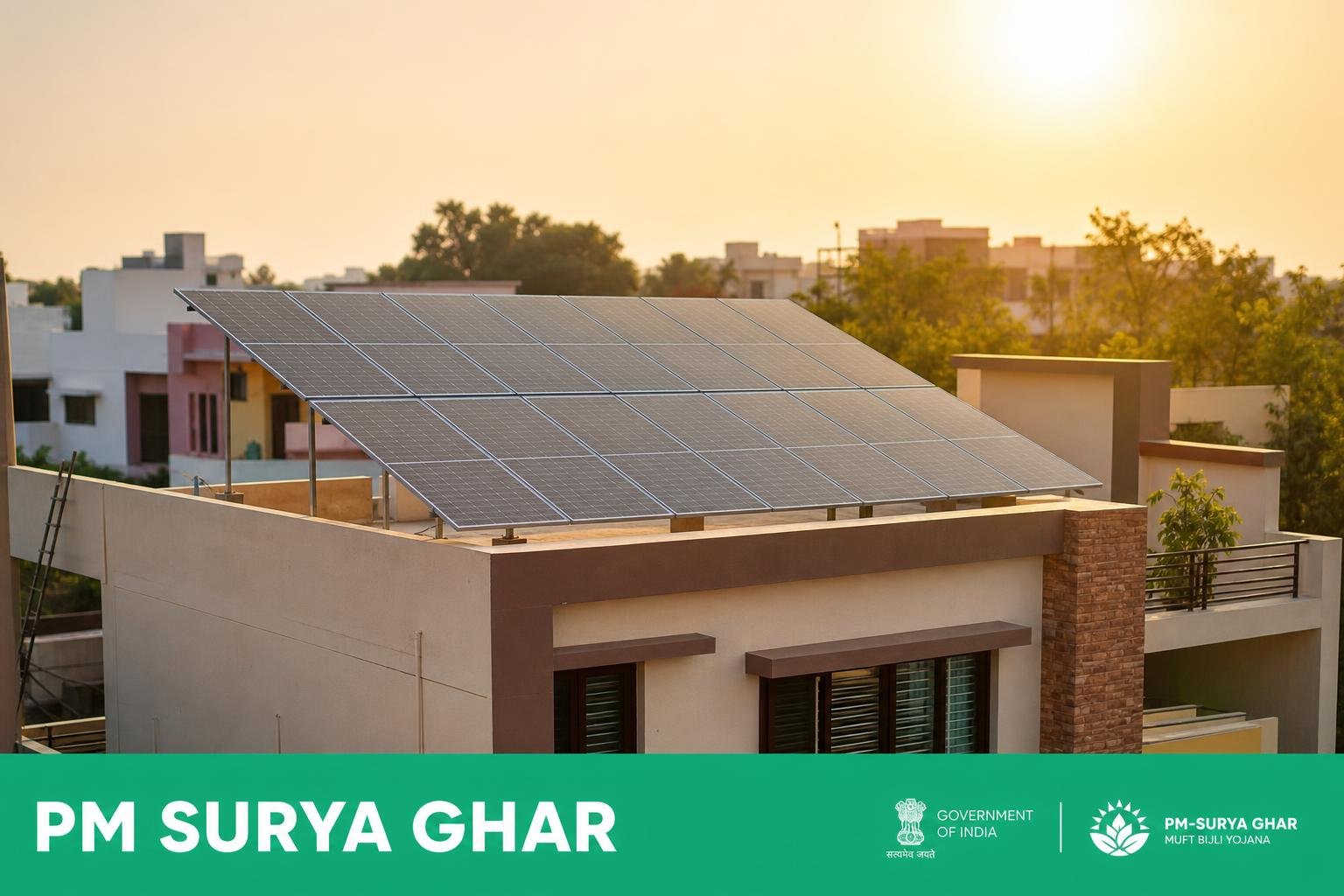
Discover Surya Ghar Muft Bijli Yojana 2026 rooftop solar subsidy amounts, eligibility criteria, and a step-by-step online registration guide.
Staring at massive monthly electricity bills during scorching summer months can send a shock wave through any household budget. If you are tired of watching your hard-earned money drain away on unpredictable power tariffs while facing frequent grid voltage fluctuations, exploring cleaner alternative energy options feels like an urgent necessity.
Fortunately, the PM Surya Ghar Muft Bijli Yojana offers a massive government subsidy to help households switch to solar rooftop power and slash their electricity expenses.
What is Surya Ghar Muft Bijli Yojana and Who Launched It?
Launched by the Government of India under the leadership of Prime Minister Narendra Modi, the PM Surya Ghar Muft Bijli Yojana is a national rooftop solar initiative aimed at illuminating households while promoting clean energy.
The scheme provides heavy financial subsidies to install solar panels on residential rooftops, enabling families to generate their own electricity, cut down monthly bills to near zero, and even sell surplus power back to the grid.
Key Benefits of the Scheme
- Substantial Financial Subsidy: Up to ₹30,000 subsidy for a 1 kW system, ₹60,000 for a 2 kW system, and ₹78,000 for systems ranging from 3 kW up to 10 kW.
- Free Electricity: Generating 300 units of free electricity every month for households opting for standard rooftop capacities.
- Income from Surplus Power: Excess power generated can be fed back into the local discom grid through net metering, earning households extra income.
Eligibility Criteria
To qualify for the rooftop solar subsidy scheme, you must meet these simple criteria:
- Must be an Indian citizen with a valid residential house roof suitable for solar installation.
- Must have an active electricity connection in the applicant’s name with regular bill payments.
- Must not have availed any other central solar subsidy for the same property previously.
Documents Required
Keep these documents ready before registering on the solar portal:
- Electricity bill of your residential connection (recent copy)
- Aadhaar Card for identity verification
- Bank passbook details linked with Aadhaar for direct subsidy transfer
- Passport-size photograph and mobile number
How to Apply Online for Surya Ghar Yojana (Step-by-Step)
If you want to register your rooftop solar plant and claim government financial backing, follow these simple steps:
- Visit the official portal at pmsuryaghar.gov.in.
- Register by selecting your State, Electricity Distribution Company (Discom), and entering your consumer account number and mobile number.
- Log in with your consumer credentials and apply for the Rooftop Solar Plant by filling out the online application form.
- Once feasibility approval is granted by your local discom, get the installation done through an empanelled registered vendor.
- Submit plant details and your net meter installation report on the portal to trigger direct subsidy disbursement into your bank account.
Common Mistakes and Things to Watch Out For
- Using Unregistered Vendors: Always hire vendors officially empaneled on the national portal; installations by unauthorized technicians will disqualify you from receiving government subsidies.
- Ignoring Roof Shadow Analysis: Ensure your rooftop receives direct sunlight without obstruction from trees or high-rise structures to maximize power generation.
- Delayed Net Metering Setup: Coordinate promptly with your local electricity board after panel installation to get the net meter fitted.
Frequently Asked Questions (FAQs)
1. How much subsidy will I get for a 2 kW solar system? The government provides a fixed subsidy of ₹60,000 for a 2 kW residential rooftop solar installation.
2. What is the official website for registration? You can register and track applications exclusively on the official website at pmsuryaghar.gov.in.
3. Can tenants apply for this solar scheme? Tenants can apply provided they obtain a No Objection Certificate (NOC) from the house owner and have a verified electricity connection in their billing circle.
4. How is the subsidy transferred? The subsidy amount is credited directly to the beneficiary’s Aadhaar-linked bank account within 30 days after installation inspection and net meter commissioning.
5. What happens to surplus solar electricity? Surplus electricity is exported to the grid through a net meter, and your local electricity provider adjusts or pays for the exported units as per state regulations.
Conclusion
Switching to clean solar energy protects your household from rising power tariffs for decades to come. Visit pmsuryaghar.gov.in today, complete your registration, and take charge of your energy independence in 2026.