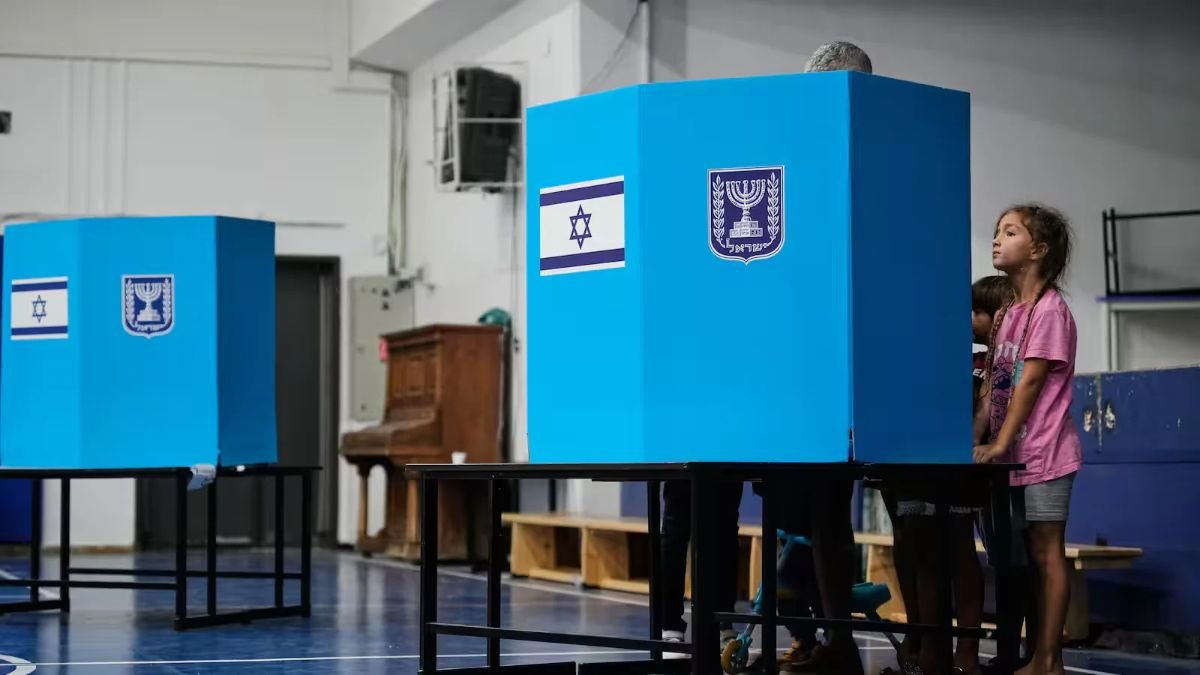
Israel Election 2026: Results, Netanyahu, and Coalition Politics. Understand Israel’s 2026 election developments, Benjamin Netanyahu’s political position, coalition negotiations, and the issues shaping the country’s political future. Israel election 2026. Israel election results, Benjamin Netanyahu latest news, Israeli coalition government, Israel opposition, Israeli politics 2026, Israel political crisis.
Israeli politics has entered another period of uncertainty, with the balance between rival political camps raising questions about who can govern and what direction the country will take next.
The stakes extend beyond the personalities involved. Israel’s government must address security challenges, domestic divisions, economic pressures, and questions about the country’s institutions. The outcome of political negotiations can affect how those issues are debated and which policies receive priority.
Reuters reporting published on October 27 and 28, 2026, described an election environment in which competing camps were struggling to establish a clear path to government. The reports also highlighted Benjamin Netanyahu’s continuing political position and the role of rival figures, including Gadi Eisenkot.
These developments require careful interpretation. Election projections, party-level contests, coalition negotiations, and the formation of a government are different stages of the political process. A headline about a candidate’s position does not necessarily establish who will ultimately govern.
For readers following Israeli politics, the essential questions are straightforward: what has been decided, what remains unresolved, and what happens next?
How Israel’s Political System Works
Israel is a parliamentary democracy. Voters elect members of the Knesset, the country’s national legislature, through a system of proportional representation.
Unlike a presidential system in which the winner of a nationwide presidential election directly takes office as head of government, Israel’s prime minister depends on the ability to form and maintain a parliamentary coalition.
This makes party negotiations particularly important.
A party can win the largest share of votes without securing an outright parliamentary majority. It may need to negotiate with other parties to assemble enough support to govern.
The process can involve compromises over policy, ministerial appointments, budgets, and legislative priorities.
Why coalition negotiations can take time
Parties entering negotiations may share some objectives but disagree sharply on others.
One party might prioritize security policy, another religious or social questions, and another economic reforms. Even parties that oppose the same political leader may struggle to agree on a common governing programme.
Negotiations can therefore continue after voters have cast their ballots.
During this period, the distinction between a projected result and a functioning government matters. A party’s electoral performance may influence negotiations without guaranteeing that it can secure the necessary parliamentary support.
What Do the Latest Israel Election Developments Mean?
Reuters reported on October 27 that exit polls suggested a close contest between Netanyahu’s camp and a rival opposition bloc, leaving neither side with an obvious route to a governing majority.
A subsequent Reuters report on October 28 described Netanyahu as retaining significant support among Israeli Jewish voters, while political uncertainty remained.
These reports underline the need to distinguish political support from the ability to form a government.
A leader can retain a substantial electoral base and still face difficulty assembling a coalition. Conversely, opposition parties may collectively challenge an incumbent without agreeing on a single alternative government.
The practical outcome depends on parliamentary arithmetic, negotiations, party commitments, and the applicable constitutional process.
Readers should consult the latest official statements and reliable reporting before treating any projected outcome as final.
Benjamin Netanyahu’s Political Position
Benjamin Netanyahu has been one of the most influential figures in Israeli politics for decades. His political career has involved periods in government and opposition, making his continued role a central subject of public debate.
Supporters often emphasize his experience in national security, diplomacy, and leadership during difficult regional conditions. Critics raise concerns about his political decisions, approach to governance, and the consequences of policies pursued under his leadership.
Those competing assessments are part of the political landscape, but they should not be confused with the procedural question of who can command a parliamentary majority.
A leader’s popularity, a party’s electoral performance, and the ability to form a stable government are related but separate matters.
What could determine Netanyahu’s future?
Several factors could shape his political position:
- Whether his political camp can secure sufficient parliamentary support.
- Whether rival parties can agree on a workable alternative.
- The policy concessions parties are willing to make.
- Public confidence in the political leadership.
- Developments in security, diplomacy, and the domestic economy.
No single factor determines the outcome by itself. Coalition negotiations can change the political picture, and initial projections may not capture the final arrangement.
The Role of the Opposition
Opposition parties have an important role in parliamentary democracies. They scrutinize government decisions, propose alternative policies, and attempt to persuade voters that a different leadership or programme would produce better outcomes.
In Israel, opposition politics can be complicated by differences over security, religion and state, constitutional questions, and the future direction of the country.
Parties may share concerns about the incumbent government but disagree on how to address them.
That creates a difficult strategic problem: opposing a government is not the same as agreeing on a replacement.
For an opposition coalition to govern effectively, its members need sufficient common ground to pass budgets, maintain parliamentary support, and implement a programme. Without that agreement, an apparent electoral breakthrough may not translate into stable government.
Security and Foreign Policy Remain Central Issues
Israeli elections take place within a regional environment shaped by security concerns, relations with neighbouring countries, and broader international diplomacy.
Voters may evaluate leaders based on their handling of security threats, military decisions, hostage-related negotiations where relevant, relations with allies, and prospects for regional stability.
Different voters may interpret the same events in sharply different ways.
Some may prioritize deterrence and military strength. Others may emphasize diplomacy, the costs of prolonged conflict, or the need for political arrangements that reduce future violence.
These debates are difficult to separate from domestic politics because security decisions can affect public confidence, government spending, international relations, and daily life.
Objective analysis should therefore distinguish documented events and official policy from predictions about what a new coalition might do.
The Economic Questions Behind Israeli Politics
Political uncertainty can affect business confidence, investment decisions, and household expectations.
Companies may delay some decisions when they cannot predict tax policy, government spending, regulation, or the wider security environment. Households may also pay close attention to inflation, employment, housing costs, and public services.
However, it would be misleading to attribute every economic movement to election uncertainty alone. Global market conditions, regional security developments, monetary policy, and international trade can all influence economic outcomes.
A change in government may alter priorities, but the effects depend on the policies actually implemented.
For investors and businesses, the sensible approach is to monitor official policy proposals and economic data rather than react to every political headline.
What Happens After an Election?
The process depends on the official results and the country’s applicable legal and constitutional procedures.
Broadly, political leaders must determine whether a candidate or party can secure sufficient parliamentary backing to form a government. Negotiations may involve agreements among several parties, including decisions about cabinet positions and policy priorities.
If a stable governing arrangement cannot be formed, further political developments may follow under the relevant legal framework.
It is important not to assume that a close election automatically leads to another election. Coalition negotiations can produce unexpected agreements, and the timetable depends on the rules and circumstances in force.
For accurate updates, readers should follow official Israeli government and Knesset communications alongside established news organizations such as Reuters.
How to Follow Israel Election News Without Being Misled
Political news often moves faster than verified information. Social media posts may describe a projected result as final or present a negotiation proposal as an agreement already reached.
A few simple checks can help.
First, look at the publication date. A report that was accurate yesterday may have been superseded by an official announcement today.
Second, distinguish exit polls from certified results. Exit polls estimate voter behaviour and can differ from final outcomes.
Third, separate reported facts from analysis. A journalist may accurately report that negotiations are underway while an analyst offers an interpretation of their likely outcome.
Finally, compare important claims across reliable sources. Where an issue remains disputed or unresolved, responsible reporting should acknowledge that uncertainty rather than manufacture certainty.
Why the Outcome Matters
Israel’s political direction affects domestic policy, the country’s security debates, regional diplomacy, and relationships with international partners.
But the immediate question is institutional: which political camp can assemble a government capable of governing?
The answer will depend on verified results, coalition negotiations, and the decisions of political parties. The consequences for policy will become clearer only as commitments are translated into government action.
For readers, the most useful approach is to follow developments carefully without assuming that every dramatic headline represents a settled outcome.
Elections determine political representation. Negotiations determine whether that representation can become a functioning government. Understanding the difference is essential to understanding Israeli politics.
Keywords Integrated
- Israel election 2026
- Israel election results
- Benjamin Netanyahu latest news
- Israeli coalition government
- Israel opposition
- Israeli politics 2026
- Israel political crisis
- Knesset election
- Israel government formation
- Israeli parliamentary system
- Netanyahu political future
- Israel election analysis
- Israeli security policy
- Israel foreign policy
- Israel coalition negotiations